ElevenLabs · Practical guide
A voice agent can catch the first call. Who owns the next step?
What a small business should settle before putting an AI voice on the phone.
A note from the studio
The phone rings while everyone is on a job. By the time someone calls back, the customer has moved on. A voice agent might catch the basics. The office still needs a useful message and a chance to call back.
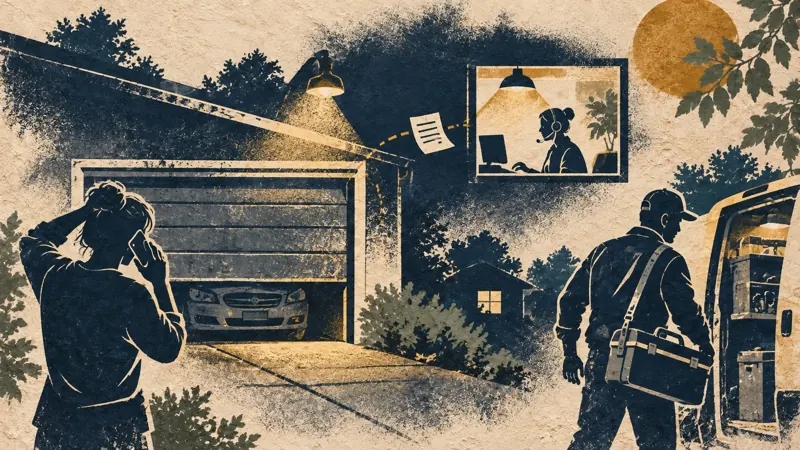 Featured podcast / The Deeper DiveThe call at eight forty-sevenWatch the illustrated story or listen after the guide
Give it a narrow job
ElevenLabs provides conversational agents that can use a knowledge base of business information. For a service team, a sensible first job is collecting the caller's name, location, problem, and best callback number. The agent can explain ordinary hours and service area from approved material. It should say when it does not know an answer.
Before connecting it to a live number, try twenty awkward calls. Ask about a town just outside your area. Interrupt it. Change the garage-door request halfway through. Give it a noisy street address. Read the handoff your dispatcher receives. If the handoff is confusing, the voice alone has solved very little.
Keep the promise small
A caller should know they are speaking with an AI assistant and when a person will take over. Let staff review bookings, prices, and unusual requests before the agent commits the business. Keep the source material current: an old holiday schedule or stale service policy can turn a smooth call into a bad promise.
The first metric I would watch is how many usable callbacks the team gets, followed by how often a human has to correct the record. A pleasant voice is nice. A clean handoff is the business result.
A practical first step
What we would put in place
- Choose one after-hours call type.
- Test noisy callers, prices, and handoffs.
- Send the note to a named person and check returned calls.
Starting tool cost
$0 to test; $6/month StarterThe agent Free tier includes 15 call minutes; Starter includes 75. Phone service, model usage, extra minutes, and setup may add cost.
Check ElevenAgents pricing USD, checked September 25, 2026. Tool fees are separate from design, development, and ongoing care. See how Mata.Works quotes the build and care.Featured podcast / The Deeper Dive
The call at eight forty-seven
A hypothetical garage door call after hours tests what an AI voice should collect, promise, and hand to a person.
Read the episode transcript
AI voices perform a script reviewed by Mata.Works. Landon and Tam are the illustrated hosts. The business scenario is an example.
Landon: It is eight forty-seven at night. Someone calls a garage door company. Their door will not open, and the car is inside. The office is closed. What should an AI voice say?
Tam: First, say it is an AI assistant. Then get the callback number, address, and what happened. If the company has an emergency path, find out whether this call belongs there. It should not coach someone through a spring repair or promise a truck that no one has assigned.
Landon: ElevenLabs can make the voice sound calm. The owner still has to decide what happens after the call.
Tam: Exactly. If the business advertises after-hours help, name the on-call person and how they get alerted. Decide what happens when that person misses the alert. If there is no after-hours service, the voice should say when the office will call back.
Landon: What would a good handoff look like in the morning?
Tam: "Customer in North Richland Hills. Car trapped behind a closed door. Callback number confirmed. Street number unclear. Urgent alert sent to the on-call technician at eight fifty." The office can act on that. "Customer has door issue" sends them back to the recording.
Landon: I would test it with a noisy caller, and one who changes the address halfway through.
Tam: Also ask for a price it cannot know. Interrupt it. Ask for a human. Then check the note the team actually receives. Did the agent invent an appointment? Did it mark uncertainty? Did the right person get the call?
Landon: What should the owner measure after launch?
Tam: Start with one narrow kind of after-hours call. Count usable callback details, corrections staff had to make, and actual returned calls. Listen to failures each week. The business is paying to recover missed opportunities and help stranded customers, not to win a voice contest.
Would this fix a real snag at your shop?
Catch the call after hours