NotebookLM · Practical guide
Your best answers are probably buried in documents.
How a source-grounded notebook can help a small team learn and explain its own work.
A note from the studio
The answer is in a PDF, an old training note, or a project folder somebody remembers. A new employee asks the same question again. NotebookLM offers a way to bring those sources together and explore them through questions and audio discussion.
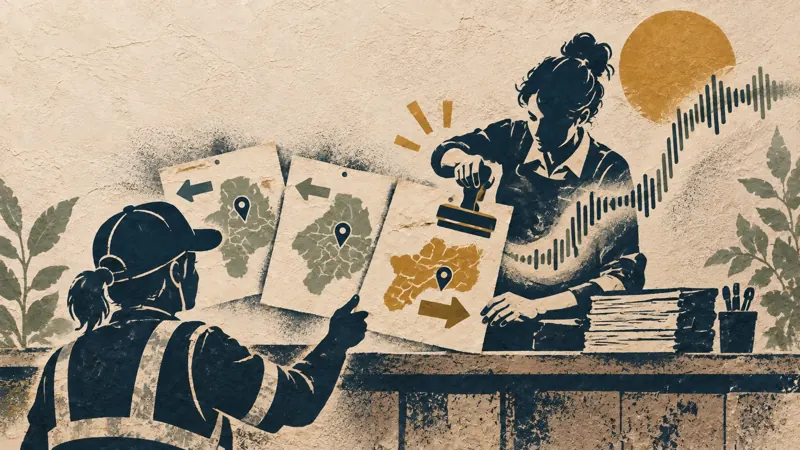 Featured podcast / The Deeper DiveThe answer in the wrong documentWatch the illustrated story or listen after the guide
Start with material you trust
Google's NotebookLM works from sources you add to a notebook. A business could gather its current service-area policy, intake checklist, and customer FAQ, then ask where the documents agree or leave gaps. It can also make an Audio Overview: a podcast-style discussion of the notebook's sources.
That is useful for onboarding or getting ready for a meeting. A manager could listen to the overview on the drive in, then open the sources to check a detail. The audio is a way into the material, not a new policy document.
Check the source before you act
Google warns that generated discussions reflect the sources provided and may be inaccurate. If the notebook contains an old price sheet, the fluent voice may make an old answer sound current. Put an owner and a review date on important documents. Leave sensitive material out until you have checked the sharing and account settings that apply to your team.
I would begin with a low-stakes notebook: a public FAQ and a few approved training notes. If it helps a person find an answer faster, add the next set of documents deliberately.
A practical first step
What we would put in place
- Name the current service-area policy and its owner.
- Remove old copies from the training set.
- Make one audio overview and test a new hire on an edge case.
Starting tool cost
$0 to try with a personal accountBasic NotebookLM access is free with a personal Google account; business Workspace plans include Gemini Notebook access. Confirm your team's plan and sharing rules before uploading internal files.
Check Google Workspace Gemini Notebook USD, checked September 25, 2026. Tool fees are separate from design, development, and ongoing care. See how Mata.Works quotes the build and care.Featured podcast / The Deeper Dive
The answer in the wrong document
A dispatcher finds conflicting service-area documents. The team needs a source owner before it needs a fluent answer.
Read the episode transcript
AI voices perform a script reviewed by Mata.Works. Landon and Tam are the illustrated hosts. The business scenario is an example.
Landon: A dispatcher asks whether the company serves a town north of Fort Worth. One PDF says yes. A newer spreadsheet says no. A new hire finds the old PDF first and gives the customer the wrong answer.
Tam: That is a source problem. NotebookLM can help the team explore and talk through documents, including an audio overview for training. But it cannot decide which conflicting policy the owner meant to keep.
Landon: What should the owner do before anyone makes a podcast from those files?
Tam: Name the current service map, put a date and owner on it, and mark the old copy as retired. Do the same for hours, fees, and anything staff promise to customers. Then give the tool a clean set of sources.
Landon: What would the audio overview be good for?
Tam: A new dispatcher could listen to how the service area works and which questions need a manager. That is easier to absorb than a folder of PDFs. Then test the learning: give the new hire an address at the edge of the map and ask where they would check it.
Landon: So the recording is a starting point, not the policy desk.
Tam: Right. If a customer is asking about an edge address, the dispatcher should open the current map or ask the person who owns it. A polished audio answer can still carry an old mistake.
Landon: How would you know this helped the business?
Tam: Track the questions new staff ask repeatedly and the corrections managers make. If the same confusion comes up, fix the source and make a new overview. The owner should know who updates it when the service area changes.
Landon: The business decision is whether the team has one answer it can stand behind.
Tam: Yes. The tool makes knowledge easier to hear. The company still owns what is true.
Would this fix a real snag at your shop?
Sort out conflicting answers