Mata.Works presents / an audio series
The Deeper Dive.
One real business question at a time. We take the shiny tool out of the pitch deck and put it in a shop, an office, or a customer's day.
The episodes
Pick the business problem first. Each story has an article, an audio conversation, and an illustrated video.
Business problem / 01
Keep customers informed
Answer the call, carry the lead, and tell people when the plan changes.
01
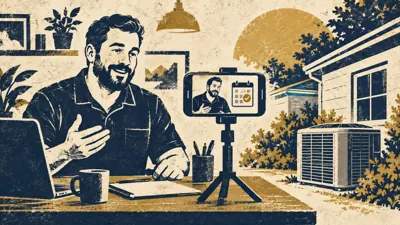 HeyGen / 1:50Do I have to stay home all day?
+
Read the episode transcript
AI voices perform a script reviewed by Mata.Works. Landon and Tam are the illustrated hosts. The business scenario is an example.
Landon: An HVAC company hears the same question every morning: "Do I have to stay home all day for the technician?" The owner wants a short video to answer it. What belongs in the script?
Tam: The actual arrival process. If dispatch can narrow a visit to a two-hour window and send a text when the technician is on the way, say that. If the window is still morning or afternoon, say that instead. The video should describe what the shop can do on a busy Tuesday, not its best day ever.
Landon: HeyGen could put a presenter on screen without asking the owner to film that answer every time it changes.
Tam: Yes. That is useful for a question customers ask again and again. But the presenter will say exactly what we give it. It will not notice that the dispatcher stopped sending those texts last month.
Landon: So who signs off?
Tam: The person who owns scheduling. Read the script with dispatch, then make one test booking. Did the customer receive the update the video promises? If the answer is no, fix the process or change the words before publishing.
Landon: Give me the version that would make you nervous.
Tam: "We always arrive between eight and ten, and you never have to wait." It sounds reassuring. One missed visit makes it a broken promise. I would rather hear, "We'll give you an arrival window when we confirm your appointment. If the route changes, our office will update you."
Landon: Less flashy, more believable.
Tam: And more useful. Put the video where the question comes up: the booking page and appointment email. Give it an owner and a date to review it. If the schedule changes, update the video the same day you update the customer message.
Landon: What tells the owner the video worked?
Tam: Fewer calls asking about the window, fewer surprises on visit day, and customers who can repeat what will happen next. The business is buying a clear answer it can keep true.
In this episode
A fictional HVAC company wants an AI presenter to explain its arrival window. First, the team needs one answer it can stand behind.
- What should the video answer?
- Who checks the promise in the script?
- How will customers know when the technician is coming?
02
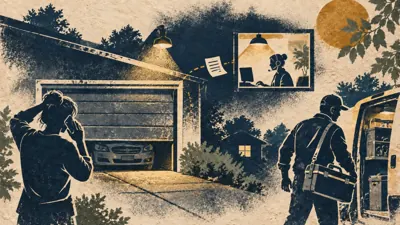 ElevenLabs / 1:42The call at eight forty-seven
+
Read the episode transcript
AI voices perform a script reviewed by Mata.Works. Landon and Tam are the illustrated hosts. The business scenario is an example.
Landon: It is eight forty-seven at night. Someone calls a garage door company. Their door will not open, and the car is inside. The office is closed. What should an AI voice say?
Tam: First, say it is an AI assistant. Then get the callback number, address, and what happened. If the company has an emergency path, find out whether this call belongs there. It should not coach someone through a spring repair or promise a truck that no one has assigned.
Landon: ElevenLabs can make the voice sound calm. The owner still has to decide what happens after the call.
Tam: Exactly. If the business advertises after-hours help, name the on-call person and how they get alerted. Decide what happens when that person misses the alert. If there is no after-hours service, the voice should say when the office will call back.
Landon: What would a good handoff look like in the morning?
Tam: "Customer in North Richland Hills. Car trapped behind a closed door. Callback number confirmed. Street number unclear. Urgent alert sent to the on-call technician at eight fifty." The office can act on that. "Customer has door issue" sends them back to the recording.
Landon: I would test it with a noisy caller, and one who changes the address halfway through.
Tam: Also ask for a price it cannot know. Interrupt it. Ask for a human. Then check the note the team actually receives. Did the agent invent an appointment? Did it mark uncertainty? Did the right person get the call?
Landon: What should the owner measure after launch?
Tam: Start with one narrow kind of after-hours call. Count usable callback details, corrections staff had to make, and actual returned calls. Listen to failures each week. The business is paying to recover missed opportunities and help stranded customers, not to win a voice contest.
In this episode
A hypothetical garage door call after hours tests what an AI voice should collect, promise, and hand to a person.
- What can the voice safely promise?
- Who receives an urgent alert?
- Can the office act on the handoff?
03
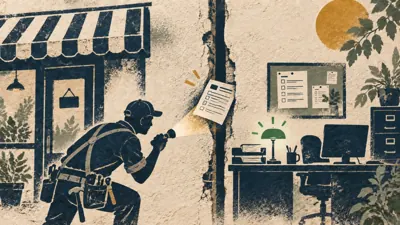 Railway / 1:46The form says thank you
+
Read the episode transcript
AI voices perform a script reviewed by Mata.Works. Landon and Tam are the illustrated hosts. The business scenario is an example.
Landon: A homeowner asks a roofing company for an estimate on Friday. The form says, "Thanks, we'll be in touch." Monday morning, the office has no request. Where did it go?
Tam: We should be able to answer that. Maybe the form never saved the request. Maybe it saved it but the email failed. Maybe it went to an inbox nobody watches. Those are three different fixes.
Landon: Where does Railway enter the story?
Tam: Railway can run the custom website or tool that receives the request. The team can deploy changes and inspect what the app did. But putting code on a host does not make the office receive a lead. We have to design that path.
Landon: Walk me through the path you would want.
Tam: When the customer presses submit, save the request and give it an identifier. Only then show thank you. Send the office a notification, but keep the saved request available if the email gets lost. If delivery fails, alert someone who can recover it.
Landon: So the office should have a place to see every request, not just a pile of emails.
Tam: Yes. And an owner should be able to ask, "How many came in this weekend? Which ones have no reply?" without asking a developer to dig through logs. Logs help diagnose a failure; a simple request list helps run the business.
Landon: What is the test before the site goes live?
Tam: Submit a real test request from a phone. Confirm it appears in the list, reaches the right person, and can be followed up. Then deliberately break the notification in a safe test and check that the request is still there. Practice the recovery once.
Landon: And after launch?
Tam: Keep a small daily check of new requests and unanswered ones. Hosting should make the tool dependable to operate. The business result is that a customer who asked for an estimate is visible to the team, even when an email fails.
In this episode
A roofing estimate request vanishes between the form and the office. The real question is where the request went.
- Was the request saved?
- Who sees a failed notification?
- How does the team recover the lead?
12
 Twilio / 2:02The technician is running late
+
Read the episode transcript
AI voices perform a script reviewed by Mata.Works. Landon and Tam are the illustrated hosts. The business scenario is an example.
Landon: A garage-door company gives a customer a noon-to-two arrival window. At one thirty, the technician is still across town. The office knows. The customer does not.
Tam: And by two fifteen, the customer is calling to ask whether anybody is coming. The fix begins with a simple question: how does dispatch send a useful update, and where does the customer's reply go?
Landon: This is where Twilio comes in?
Tam: Twilio can send and receive texts and handle calls for a business tool. A developer could connect it to the shop's schedule so dispatch can send a message from the right job and see the reply. But Twilio does not know that a technician is late until the schedule or a person tells it.
Landon: What would the text actually say?
Tam: Something the office can stand behind. "Your technician is delayed. We now expect to arrive between two thirty and three. Reply if that no longer works, or call the office." It should identify the shop. And if dispatch cannot give a reliable new window yet, say that and promise a specific time for the next update instead.
Landon: Then the customer replies, "I have to leave at three." What happens?
Tam: That reply belongs on the job where dispatch can act on it. A human confirms the new plan. An automated "Thanks, you're rescheduled" would be a bad answer if nobody moved the appointment.
Landon: What should the owner decide before turning on texts?
Tam: How customers choose to receive updates, what the shop is allowed to send, how people stop messages, and who handles replies after hours. Keep the opt-in and opt-out records straight. Also test a wrong number, a customer who says stop, and a message that fails to deliver.
Landon: Would you start by texting every customer about everything?
Tam: I would start with one event: a changed arrival window for customers who agreed to texts. Watch how many replies need a person and whether the new time was accurate. The point is that a customer waiting at home hears the truth soon enough to change their day.
In this episode
A garage-door customer is waiting through a delayed arrival window. The office needs a useful update and a way to act on the reply.
- How does dispatch know when to send an update?
- Where does the customer's reply go?
- Who confirms a changed appointment?
Business problem / 02
Give the team one reliable answer
Keep schedules, policies, and AI drafts tied to information the business can trust.
06
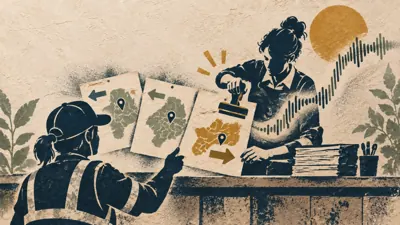 NotebookLM / 1:42The answer in the wrong document
+
Read the episode transcript
AI voices perform a script reviewed by Mata.Works. Landon and Tam are the illustrated hosts. The business scenario is an example.
Landon: A dispatcher asks whether the company serves a town north of Fort Worth. One PDF says yes. A newer spreadsheet says no. A new hire finds the old PDF first and gives the customer the wrong answer.
Tam: That is a source problem. NotebookLM can help the team explore and talk through documents, including an audio overview for training. But it cannot decide which conflicting policy the owner meant to keep.
Landon: What should the owner do before anyone makes a podcast from those files?
Tam: Name the current service map, put a date and owner on it, and mark the old copy as retired. Do the same for hours, fees, and anything staff promise to customers. Then give the tool a clean set of sources.
Landon: What would the audio overview be good for?
Tam: A new dispatcher could listen to how the service area works and which questions need a manager. That is easier to absorb than a folder of PDFs. Then test the learning: give the new hire an address at the edge of the map and ask where they would check it.
Landon: So the recording is a starting point, not the policy desk.
Tam: Right. If a customer is asking about an edge address, the dispatcher should open the current map or ask the person who owns it. A polished audio answer can still carry an old mistake.
Landon: How would you know this helped the business?
Tam: Track the questions new staff ask repeatedly and the corrections managers make. If the same confusion comes up, fix the source and make a new overview. The owner should know who updates it when the service area changes.
Landon: The business decision is whether the team has one answer it can stand behind.
Tam: Yes. The tool makes knowledge easier to hear. The company still owns what is true.
In this episode
A dispatcher finds conflicting service-area documents. The team needs a source owner before it needs a fluent answer.
- Which policy copy is current?
- What can an Audio Overview help a new hire learn?
- Where should staff verify an answer?
07
 Supabase / 1:55Three versions of Tuesday
+
Read the episode transcript
AI voices perform a script reviewed by Mata.Works. Landon and Tam are the illustrated hosts. The business scenario is an example.
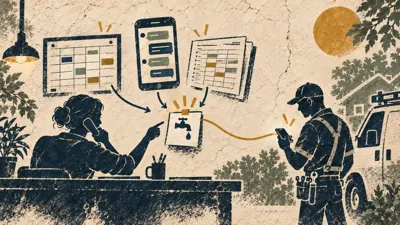
Landon: Tuesday morning at a small plumbing company. The office has six jobs on a spreadsheet. A technician has seven in a text thread. The owner has a photo of a whiteboard with eight. Which one is the schedule?
Tam: At the moment, nobody knows. And that is expensive in a very ordinary way. Someone drives to an address after the customer has moved the appointment. Another customer never gets a call back.
Landon: So we buy Supabase and the three lists become one?
Tam: Somebody still has to build the workflow. Supabase can hold the shared records behind a custom tool: each job, address, status, and update in one database. It can also handle sign-in and rules about who may see or change a record. It does not decide which of those eight jobs is real.
Landon: Who decides that?
Tam: The business. Start with one rule: the dispatcher owns the schedule. When a customer moves a visit, the office changes the job record. The technician sees that change in the tool. A text can alert somebody, but it should not become a second schedule.
Landon: Give me a test that would catch a bad build before we put the team on it.
Tam: Change a job from Tuesday morning to Wednesday afternoon. Can the technician see the new time? Can a different technician see that customer's phone number when they should not? Can the office tell who changed the job? And if the internet drops in the van, what does the technician see?
Landon: That last one matters. A database in the cloud does not make a phone work offline.
Tam: Right. The app has to handle that. The owner also needs to know how records are backed up and how to export them. A database is where the truth lives; the team still needs a clear way to use it.
Landon: What if their current field service system already keeps one good schedule?
Tam: Keep it. We would only propose a custom tool when a real gap survives a look at what they already pay for. The decision is simple: can everybody act on the same job record, with the right access, without another round of copying and guessing?
In this episode
A plumbing shop has three different schedules. The owner needs one job record the office and technicians can trust.
- Who owns the schedule?
- Can the right technician see each change?
- What happens when a phone goes offline?
08
 OpenRouter / 2:02The answer that sounded sure
+
Read the episode transcript
AI voices perform a script reviewed by Mata.Works. Landon and Tam are the illustrated hosts. The business scenario is an example.
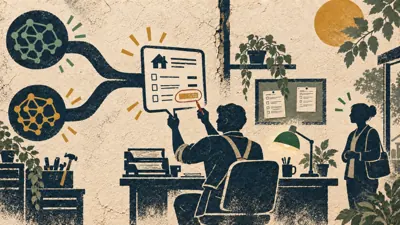
Landon: A home service office uses AI to draft replies to customer questions. One afternoon it writes, "Your repair will be $189." The owner looks up the job. There is no approved price yet.
Tam: That is where you stop the experiment. A fluent answer is still a guess if the model has no current price, diagnosis, or authority to quote. The customer will remember the number.
Landon: Where does OpenRouter fit? Does it make the answer safer?
Tam: OpenRouter gives a developer one connection to a choice of AI models. That can make it easier to compare them or change which model a tool uses. The safety comes from the job you give the model and the checks around it. If the task is "draft a reply using only our approved service-area and hours information," that is testable. "Answer anything a customer asks" is asking for trouble.
Landon: Suppose the owner wants to try two models. What would you put in front of them?
Tam: Twenty real questions with the customer details removed. Can each model say "I need the office to confirm" when it should? Does it get Saturday hours right? Does it turn a rough diagnosis into a promised price? Then compare the output, speed, and cost on that same set.
Landon: And if the cheaper one passes?
Tam: Use it for the narrow task and set a spending cap. Keep the final send button with a person until you have evidence it handles the messy cases. The model can prepare a reply; the office owns the promise.
Landon: What about private customer information going through the router?
Tam: Decide what data the job truly needs, review the route and provider policy, and strip out what it does not. If a task needs sensitive customer records, we would check that path before connecting it. A model switch should not quietly change who receives the data.
Landon: So the owner is buying choice, with controls around the choice.
Tam: Yes. The useful question is not "How many models can we access?" It is "Which one gives our staff a reliable draft for this one job, at a cost and data policy we accept?"
In this episode
An AI draft invents a repair price. The office tests models against real questions before it trusts a reply.
- Which customer replies are safe to draft?
- Can the model admit it needs the office?
- Who checks the final promise?
Business problem / 03
Make changes without losing work
Try an idea, publish a site, and keep custom software running as it changes hands.
04
 Docker / 1:49The developer is on vacation
+
Read the episode transcript
AI voices perform a script reviewed by Mata.Works. Landon and Tam are the illustrated hosts. The business scenario is an example.
Landon: The person who built a scheduling tool takes a week off. On Tuesday it stops working. The office calls a second developer, who says, "I can't even start it on my computer."
Tam: That is a handoff problem. Docker can package the application and the software it needs so another developer can run the same setup. It takes a lot of "works on my laptop" out of the conversation.
Landon: Does it package the schedule and customer records too?
Tam: Usually those live somewhere else, and they should. The second developer needs to know where the data lives, how the app connects to it, where credentials are kept, and how to restore service. A container alone will not answer any of those questions.
Landon: If I own the business, what do I ask for before the first developer goes on vacation?
Tam: Ask someone who did not build the tool to start a clean copy from the written instructions. Then have them make a test booking. Can they find a failed request? Do they know whom to call if the database is down? Can they put the previous version back if a change breaks the app?
Landon: That sounds like a rehearsal, not a binder that nobody opens.
Tam: Exactly. If the handoff fails, write down the missing step and try again. Keep the instructions with the code. The goal is for another capable person to recover the tool without guessing at the original developer's laptop.
Landon: When would you skip Docker?
Tam: If the business uses an off-the-shelf scheduling service that already meets the need, there may be no custom app to package. Use the smallest setup that another person can operate. Docker earns its place when it makes a custom tool easier to move, test, and repair.
Landon: So the owner is buying continuity.
Tam: Right. The test is whether Tuesday's appointments still work when the original developer is unavailable.
In this episode
A second developer needs to run the scheduling tool. Docker can help, but the handoff needs more than an image.
- Can someone else start the app?
- Where does its data live?
- Which setup steps still need to be written down?
05
 Kubernetes / 1:57The quote form went down
+
Read the episode transcript
AI voices perform a script reviewed by Mata.Works. Landon and Tam are the illustrated hosts. The business scenario is an example.
Landon: A twelve-person roofing company loses its quote form for an hour. A developer says, "We should move to Kubernetes." The owner asks whether that would have prevented the lost leads.
Tam: Good question. First we need to know what failed. Was the form code down? Did the database stop responding? Did the email notification fail while requests were still saved? Moving the same weak link into a larger system does not make it stronger.
Landon: Say the email service failed. Would Kubernetes help?
Tam: No. Save the request, show it to the office, and retry or alert on the notification. If the app crashed, a simple restart and monitoring might be enough. We should price the fix against the actual lost work before changing the whole platform.
Landon: When does Kubernetes become a serious option?
Tam: When there are several services that need to run across machines, traffic or release demands have outgrown simpler hosting, and the team can operate the cluster. It can help keep those services deployed and replace failed workloads. Someone still has to design the app, database, alerts, and recovery plan.
Landon: What should the owner put on the table before approving that move?
Tam: How many leads were lost? How often does this happen? What did the hour cost? What simpler fix was tried? And who will be on the hook for the larger system at two in the morning? A bigger platform has an operating bill in money and attention.
Landon: What would you do this week?
Tam: Submit a test quote every day and verify it appears where the office works. Add an alert for failures. Practice going back to the last good version. Fix the cause of this outage. If those steps still leave a costly reliability gap, then compare platforms.
Landon: The owner can buy a result: no customer request disappearing quietly.
Tam: Yes. Start with evidence from the form, not a platform name.
In this episode
A roofing company considers Kubernetes after an outage. First, find what actually failed.
- What caused the outage?
- Would orchestration address that cause?
- Who will operate the larger system?
09
 Vercel / 1:50The wrong number on Friday
+
Read the episode transcript
AI voices perform a script reviewed by Mata.Works. Landon and Tam are the illustrated hosts. The business scenario is an example.
Landon: A garage door company is running a weekend promotion. The new page looks great. At five on Friday, the owner spots the old phone number on it.
Tam: That is the kind of mistake a preview is for. On Vercel, a developer can put a change at a separate preview address. The owner can open it on a phone, read every claim, and try the call button before the public site changes.
Landon: I want the owner doing more than saying, "Looks good."
Tam: Give them a short release check. Call the number. Submit the form with a test name. Confirm the office actually received it. Read the offer dates and service area out loud. Then ask someone who did not build the page to try it on a slow phone connection.
Landon: Does Vercel make the form land in the office?
Tam: It can host the website and code behind it, but the form still needs a working destination and a way to spot failures. A green deploy screen does not prove a lead reached a person. That is why the test submission matters.
Landon: Say the team approves the preview and publishes it. What do they watch?
Tam: The same path the customer takes. Open the live page, make a real test call, submit a test lead, and see it in the inbox or customer system. Keep the previous version available so the team can recover quickly if the new one breaks.
Landon: This sounds like a release habit, not a reason to move every business website to Vercel.
Tam: Exactly. If the current host gives the team safe previews and dependable releases, keep using it. Vercel is a good fit when a custom site changes often and the people approving those changes need to see a working version first.
Landon: The owner decision is whether the Friday change can be checked before customers see it.
Tam: And whether somebody confirms the lead path after it goes live. The correct phone number is more valuable than a flawless deploy badge.
In this episode
A garage door company's promotion has an old phone number. A preview gives the owner a chance to catch it before customers do.
- Can the owner test the preview?
- Did a test lead reach the office?
- Who checks the live page after release?
10
 OpenCode / 1:50The Saturday rule
+
Read the episode transcript
AI voices perform a script reviewed by Mata.Works. Landon and Tam are the illustrated hosts. The business scenario is an example.
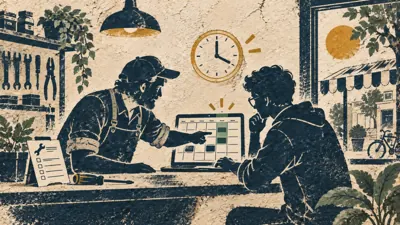
Landon: A repair shop changes its Saturday hours. The booking tool still offers the old time. The contractor who built it is busy for two weeks. The owner asks, "Can anybody else fix this?"
Tam: First, find the source code and the rule that controls Saturday bookings. If the business has the code and another developer can run it, this may be a small change. If those pieces are missing, the bigger problem is ownership and handoff.
Landon: Where could OpenCode help?
Tam: It is an open-source AI coding assistant. A developer can ask it to inspect the project, find the booking rule, propose a change, and run checks. Think of it as help for the person doing the work. It does not know whether the shop closes at two or three unless the owner tells it.
Landon: Suppose it finds the line and changes two to three. Are we done?
Tam: No. Saturday bookings may also show up in confirmation emails, the office calendar, and the service-area page. The developer reviews the change, tests those paths, and shows the owner a preview booking. Then a person approves the release.
Landon: What would you ask the owner before anyone touches the code?
Tam: Is this for every Saturday or one holiday weekend? What happens to appointments already booked? Who can override the hours? Those answers are business policy. They should be written down before the assistant starts editing.
Landon: OpenCode can use different AI providers. Does that matter to the owner?
Tam: Mostly as a cost and control choice. The team should know which model it uses, what project files it can read, and which actions require approval. The owner should see the scope and result, without having to manage model settings.
Landon: So what are we selling here?
Tam: A shop that can make a small change without waiting two weeks or gambling on a blind edit. The tools help the developer move. The business keeps its code, its rules, and the final say.
In this episode
A booking tool still offers old Saturday hours. The owner and developer need a safe way to find, fix, and test the rule.
- Does the business own its code?
- Which bookings does the new rule affect?
- Who reviews the change before release?
11
 here.now / 1:59Send me the link
+
Read the episode transcript
AI voices perform a script reviewed by Mata.Works. Landon and Tam are the illustrated hosts. The business scenario is an example.
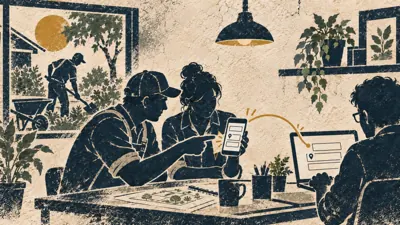
Landon: A landscaping company wants a better quote request page before spring. The owner has a sketch from a developer, but the office manager says, "I need to click it. What will a customer actually see?"
Tam: Fair. A picture will not tell you whether the address field makes sense or whether the form asks for the one detail dispatch needs. Give her a working version she can open on her phone.
Landon: And here.now is a way to get that link?
Tam: Yes. A developer or AI agent can publish a small website or interactive prototype to a live here.now address. The owner can pass it around the office and ask people to try the job, instead of reviewing a stack of screenshots.
Landon: What would you have the team test?
Tam: Ask the office manager to request a lawn cleanup as if she were a customer. Does the page ask for the service address? Can she choose the work she needs? When she reaches the end, does she know whether she has sent a real request or is only trying a demo?
Landon: That last part could get awkward.
Tam: Very. If this is a prototype, label it clearly and use sample information. Do not invite customers to enter private details into a link the team has not set up to handle. The owner should know who can open it and when the link expires.
Landon: Does it always expire?
Tam: An anonymous here.now site expires after twenty-four hours. With an account and API key, the team can keep a site live. It also has access controls if the review needs to stay within a group. Pick that setup before sending the link to a customer or putting it in an ad.
Landon: So after the office spots a missing service address, what happens?
Tam: The developer fixes the page and sends another version. Once the team likes the flow, someone connects it to the real lead process, tests a submission all the way to the office, and decides where the finished site should live.
Landon: The owner gets to make the call by trying the thing.
Tam: Exactly. A link turns "I think this will work" into "I found the missing question before a customer did."
In this episode
A landscaping owner needs to click a new quote page before customers see it. A live review link catches a missing question early.
- Can the office try the page on a phone?
- Is the link a demo or a real request form?
- What must be tested before customers use it?
Business problem / 04
Get the job right, from first call to closeout
Find missing details, recognize return calls, surface owner decisions, and explain completed work.
13
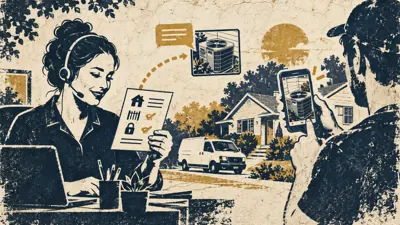 Tomorrow Ready / 1:45Before tomorrow starts
+
Read the episode transcript
AI voices perform a script reviewed by Mata.Works. Landon and Tam are the illustrated hosts. The business scenario is an example.
Landon: An HVAC company has tomorrow's first visit booked for eight. The note says, "Upstairs feels warm." Is that enough to start the day?
Tam: It may be enough to book a conversation. The office still needs to know who will provide access and whether the customer has more context. Those are questions we can ask today instead of chasing answers from the driveway.
Landon: So what would Tomorrow Ready actually show the owner?
Tam: A short list of appointments with a missing detail, a reason, and a person responsible for following up. It might say, "Access contact not confirmed." The office can clear that flag or leave a note about why it is still open.
Landon: Could the customer send a photo?
Tam: If it is useful and safe to provide. We would not ask anyone to open equipment or do a repair. And a photo does not turn an AI tool into a technician. The team checks the information and makes the technical decisions.
Landon: Where do the tools come in?
Tam: Supabase can keep the appointment details and review status together. Railway can run the small review page. Gemini can summarize a customer's note while keeping the original beside it. Twilio is optional if the customer agreed to receive a text request.
Landon: What about a garage-door or alarm-system business?
Tam: Same practical question, different checklist. Which door is the appointment for? Who will meet the installer? We build around one kind of visit first. A missing answer should raise a question, not silently cancel the appointment.
Landon: How would you know the pilot helped?
Tam: Count the useful flags, the answers received before the visit, and the flags the office dismissed. Then ask whether the morning involved less chasing. Bring us five examples from your schedule, with customer details removed, and we can work out the smallest useful first version.
In this episode
An HVAC appointment is booked, but access and customer details still need checking. Can the office catch the gaps before morning?
- Which missing details help the team prepare?
- Who follows up before the appointment?
- Who decides whether the visit is ready?
14
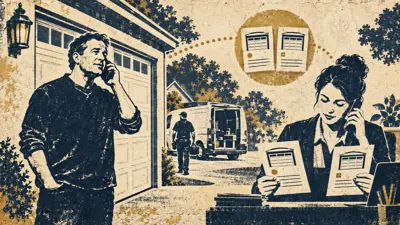 Callback Watch / 1:48The customer calls again
+
Read the episode transcript
AI voices perform a script reviewed by Mata.Works. Landon and Tam are the illustrated hosts. The business scenario is an example.
Landon: A homeowner says the garage door is making a noise again. Your team was at that address twelve days ago. Does that mean it is the same problem?
Tam: Not necessarily. There might be two doors. The customer might be describing something different. But the person answering should be able to see the earlier visit before making a new promise.
Landon: That sounds simple. Why does it get missed?
Tam: The first appointment may be under another household member's name, or the notes may be buried in a different screen. The customer repeats the story while the office hunts for it. Callback Watch would put a possible connection in front of the person taking the call.
Landon: What would that connection look like?
Tam: A small card: same address, a recent job reference, and the relevant notes. It says why the records might belong together. Staff can confirm the connection or dismiss it. A matching address alone is not a decision about what caused the problem.
Landon: Does the tool decide whether the next visit is free?
Tam: No. Your team decides what the earlier agreement covers and what to offer. The tool helps them find the record. It must not promise free work or book a return on its own.
Landon: What would you build this with?
Tam: Start with one intake source and a manageable list of recent jobs. Supabase can hold the links and review decisions. Gemini can help compare unclear notes after exact job references have been checked. Railway can run the review page.
Landon: What should the owner look for in the pilot?
Tam: How many suggestions were right, how many were wrong, and whether staff found the earlier job more quickly. Try it on fictional or approved examples first. If repeat calls regularly turn into a search party, show us that handoff and we can scope a small review tool around it.
In this episode
A garage-door concern may be tied to an earlier visit. The office needs the previous record before making a new promise.
- What makes two requests a possible match?
- How does the office check a false match?
- Who decides what to offer the customer?
15
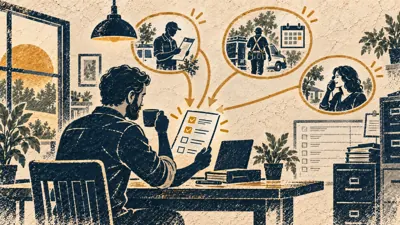 Owner Exception Brief / 1:47Three things before coffee
+
Read the episode transcript
AI voices perform a script reviewed by Mata.Works. Landon and Tam are the illustrated hosts. The business scenario is an example.
Landon: The owner opens a dashboard, then the inbox, then a text thread. By nine, she has found an old quote, a parts delay, and a customer waiting on a return call. What would a useful morning brief say?
Tam: Three lines, each with a reason and a link. "This quote has waited four days for approval." "This delayed job has no customer update." "This repeat complaint has no owner." She can see the original record and make a decision.
Landon: That sounds simple. Why doesn't every dashboard do it?
Tam: Because the hard part is deciding what deserves attention. An old quote might be deliberately on hold. A callback could already be assigned. We need rules the owner and the office agree on, not a machine that declares every aging record an emergency.
Landon: Where would the information come from?
Tam: From the systems the team already uses, starting with one or two sources. Railway can run a scheduled check. Supabase can keep a small exception list and record what happened. Gemini can shorten a long note after the rule has found an item, but the brief needs to link back to the source.
Landon: What if one system fails to update overnight?
Tam: The brief needs to say that. A blank list could mean nothing needs attention, or it could mean the connection broke. The owner should not have to guess which.
Landon: And the tool doesn't make the decisions?
Tam: Correct. It doesn't approve refunds, move appointments, or send a promise to a customer. It points the owner at the work that needs judgment. I would start with two rules and ask after a week: which alerts led to action, and which ones were noise?
Landon: So the first step is to name the interruptions that should have reached her sooner?
Tam: Exactly. Start with those real cases. Then write a brief short enough she will actually read with her coffee.
In this episode
A quote, a parts delay, and a callback need an owner's decision. A short brief should show the record behind each one.
- What counts as an exception?
- Can the owner see the original record?
- What happens when a source fails to update?
16
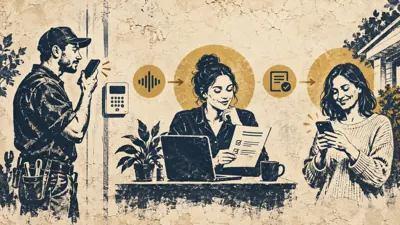 Job Closeout Draft / 1:46What is still waiting?
+
Read the episode transcript
AI voices perform a script reviewed by Mata.Works. Landon and Tam are the illustrated hosts. The business scenario is an example.
Landon: An alarm-system installer leaves a useful voice note. The customer's invoice just says, "Completed." What is the customer missing?
Tam: What was actually done, what was demonstrated, and what is still waiting. In our example, an entry sensor was fitted, but monitoring activation needs a separate appointment. That open item needs to survive the journey from the installer's note to the customer's message.
Landon: So Job Closeout Draft writes that message?
Tam: It prepares a draft from the notes supplied. The installer or office reviews it before sending anything. It might say, "We fitted the entry sensor and demonstrated the notification. The office will arrange the monitoring activation appointment."
Landon: What would be a bad draft?
Tam: "Everything is active and your home is fully protected." The source note did not say that. A fluent sentence can make a promise nobody approved. We need the original notes beside the draft so a reviewer can catch that.
Landon: And we do not want alarm codes in a customer recap.
Tam: Exactly. Keep codes, passwords, and detailed security layouts out of this writing flow. We would agree on what information belongs there before using live customer records.
Landon: How would the small version work?
Tam: Gemini can help transcribe and draft. Supabase can hold the notes and approval state. Railway can run the review page. The office can use email for a longer recap, or an approved text through Twilio if that suits the customer.
Landon: Could an HVAC or garage-door team use the same idea?
Tam: Yes, with its own checklist. A consultation awaiting a quote is different from an installation ready for handoff. Start with five completed jobs and compare the drafts with what the team actually recorded. If your office keeps translating short notes into customer explanations, that is a useful place for us to start.
In this episode
An alarm-system installation has one step still open. Can a reviewed recap tell the customer exactly what was done?
- What did the installer actually record?
- Does the recap preserve unfinished work?
- Who checks it before sending?
Written and reviewed by Mata.Works. Host voices are generated with Google Gemini. Landon and Tam’s illustrated portraits are visual hosts; they do not lip-sync the dialogue. Scenarios are illustrative.